Twenty-three Receive Awards Recognizing Excellence and Impact
The Graduate School Office of Inclusion and Student Engagement presented the 2026 Graduate Excellence and Impact Awards at the annual awards celebration on May 13 in G10 Biotech.
Department Homepage
The Graduate School Office of Inclusion and Student Engagement presented the 2026 Graduate Excellence and Impact Awards at the annual awards celebration on May 13 in G10 Biotech.
Cornell admits the Class of 2030 emphasizing real-world impact, enrolling 5,776 students from 102 countries. At Cornell University, the diverse cohort reflects the land-grant mission and applied learning goals across multiple colleges.
Five Cornell faculty members are among 126 early-career researchers across North America who have won 2026 Sloan Research Fellowships from the Alfred P. Sloan Foundation.
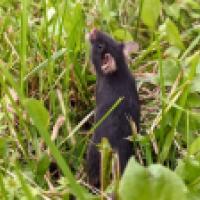
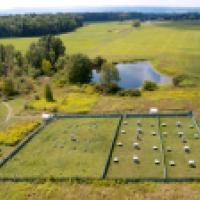
When postdoctoral researcher Matthew Zipple releases lab mice into a large, enclosed field just off Cornell’s campus, something remarkable happens.
The mice could remember new experiences that would normally be forgotten – a finding with important implications for treating Alzheimer’s disease.
Howard Howland, Ph.D. ’68, a neurophysiologist who studied the eyes of humans and animals, died Oct. 26 in Ithaca. He was 92.
The event was an example of Cornell’s interdisciplinary commitment to advancing the frontiers of neurotechnology.
Cornell researchers and collaborators have developed a neural implant so small that it can rest on a grain of salt, yet it can wirelessly transmit brain activity data in a living animal for more than a year.
Zhao researches the neural mechanisms of parrot vocalizations in the Goldberg lab.
The unrestricted fellowship funds enable Oliva and the 19 other fellows named this year to “test novel ideas and lead research that drives real-world impact.”
Ten students who participated in this summer's Nexus Scholars Program share their stories..
Antonio Fernandez-Ruiz, assistant professor and Nancy and Peter Meinig Family Investigator in the Life Sciences in the Department of Neurobiology and Behavior in the College of Arts and Sciences, has been awarded a biomedical sciences grant from the Pew Charitable Trusts.
The professorships are made possible because of gifts from alumni, parents and friends.
A new $1.5 million gift from philanthropist K. Lisa Yang ’74 has established the Charles Walcott Graduate Research Fellowship in Conservation Bioacoustics to fund graduate research at the Lab of Ornithology.
Awardees were recognized for the significant impacts they have made to advance access, engagement and belonging through their service and leadership.
This month’s featured titles – most by A&S authors – include a work of nonfiction about honeybees, a kids’ picture book, and a novel set in rural Nova Scotia.
“This project sits at the cross-roads of neuroscience, ethology and artificial intelligence."
Cornell scientists have identified the neural pathway mice use to direct the tongue to tactile targets.
Lucky breaks in a male mouse’s youth can lead to large advantages in adulthood, especially in groups that compete for food, territory and mates.
The eyes may be the window to the soul, but the pupil is key to understanding how, and when, the brain forms strong, long-lasting memories, Cornell researchers have found.
"The take-home message from my book is that these small creatures are extremely intelligent. They may well be the most intelligent of all the insects."
An interdisciplinary group of animal behavior researchers from the fields of biology, psychology, anthropology and philosophy were included in the survey. Klarman Fellow Matthew Zipple is first author.
Eleven teaching faculty from across the university have been awarded Cornell’s highest honors for graduate and undergraduate teaching, Interim President Michael I. Kotlikoff announced Oct. 22.
A classic psychedelic was found to activate a cell type in the brain of mice and rats that silences other neighboring neurons, providing insight into how such drugs reduce anxiety.
Weinan Sun, Neurobiology and Behavior
"Cornell alumni are generous with their time and efforts to assist students, to answer questions from students, or connect them to people and places."
Peter John Loewen says he's excited to support faculty in their research, meet students and showcase the value of a liberal arts education.
The study answers how people can keep learning new things for a lifetime without using up all of their neurons.
The relationship between mother and child offers clues to the mystery of why humans live longer lives than expected for their size – and sheds new light on what it means to be human.
Coming from the University of Toronto, where he was the director of the Munk School of Global Affairs and Public Policy, Loewen began his five-year appointment as the Harold Tanner Dean of the College of Arts and Sciences Aug. 1.
The dramatic decline in childhood mortality during the 20th century has added a full year to women’s lives, according to a new study.